
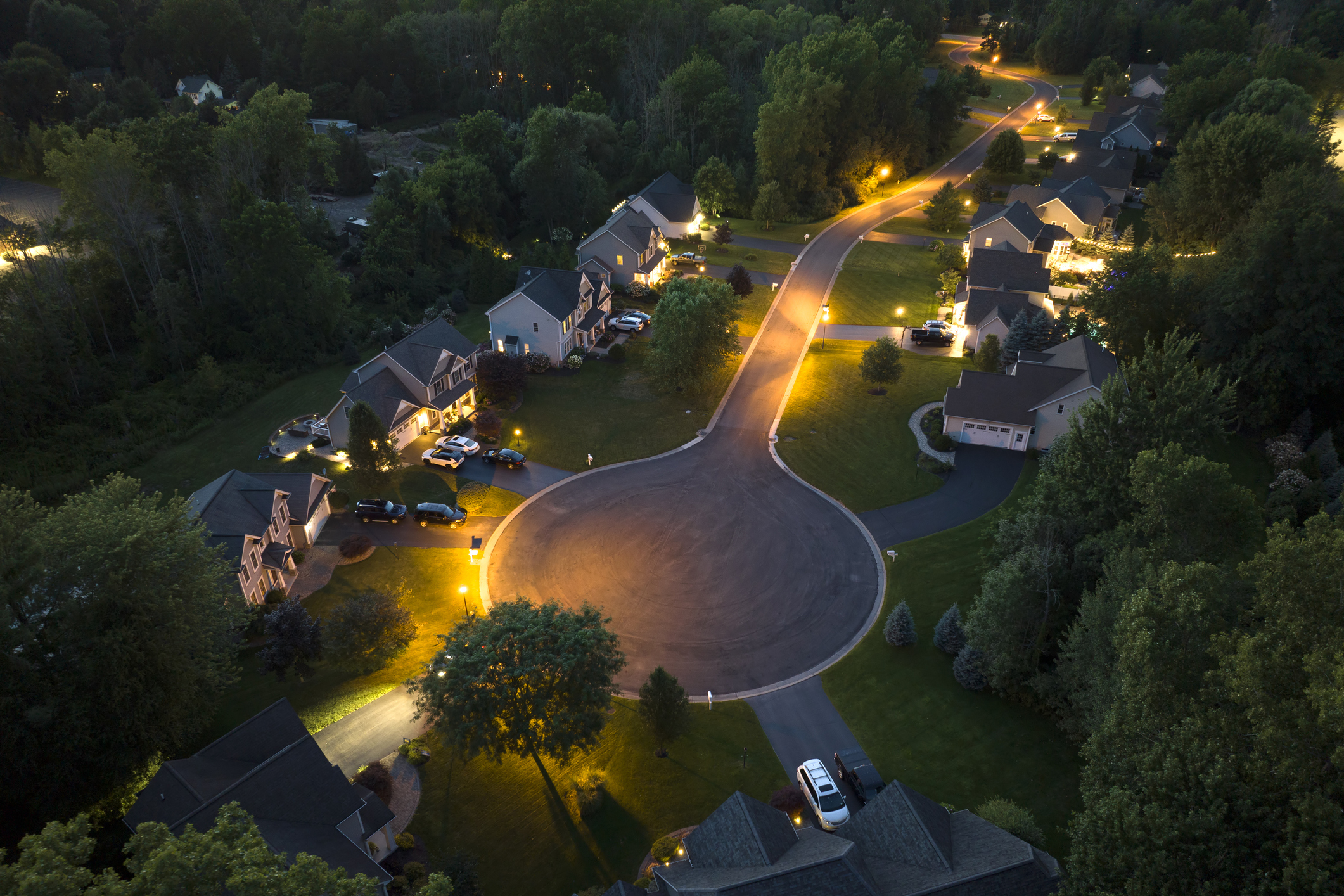
Yes, that little slice of suburban dream is actually a nightmare—it has ruined our physical health and mental health, ruined our finances and even hurt our children. How?
As North America grew in the 20th century, and suburban sprawl began to develop outside downtown cores, a fundamental change occurred. Urban centres began to be viewed as areas of commerce only, unfit for families due to crime and decay. As such, working dads ventured out to the suburbs, where a white picket fence could still be bought and they’d simply drive into the Big Smoke every day. leaving their families in country bliss.
It wasn’t a terrible idea, in concept.
It just couldn’t scale. As the cities grew, the suburbs got further and further out—15-minute commutes became 30. Then 45. Now, commuters spending an hour in traffic is commonplace.
And traffic got worse, as more and more people left the cities for what seemed like affordable, “American Dream” family housing. Developers saw residential streets becoming as congested as urban thoroughfares and decided to act—with that suburban staple, the cul de sac.
The cul de sac created a sort-of “local traffic only” situation, where the classic grid designed used for centuries was tossed out in favour of semi-private streets where the only traffic was from those who lived there.
Again, not a terrible theory—just a terrible practice. It is space-inefficient, which tipped over a domino effect of problems.
What was supposed to make mini communities actually did the opposite. With an increasing commuter culture, and zoning that separated commercial and residential by increasing distances, the inefficient traffic flows of the cul de sac compounded the need for more cars.
After all, look the below image. How are you going to walk anywhere? Where do you get a gallon of milk? Everything becomes drive-to.
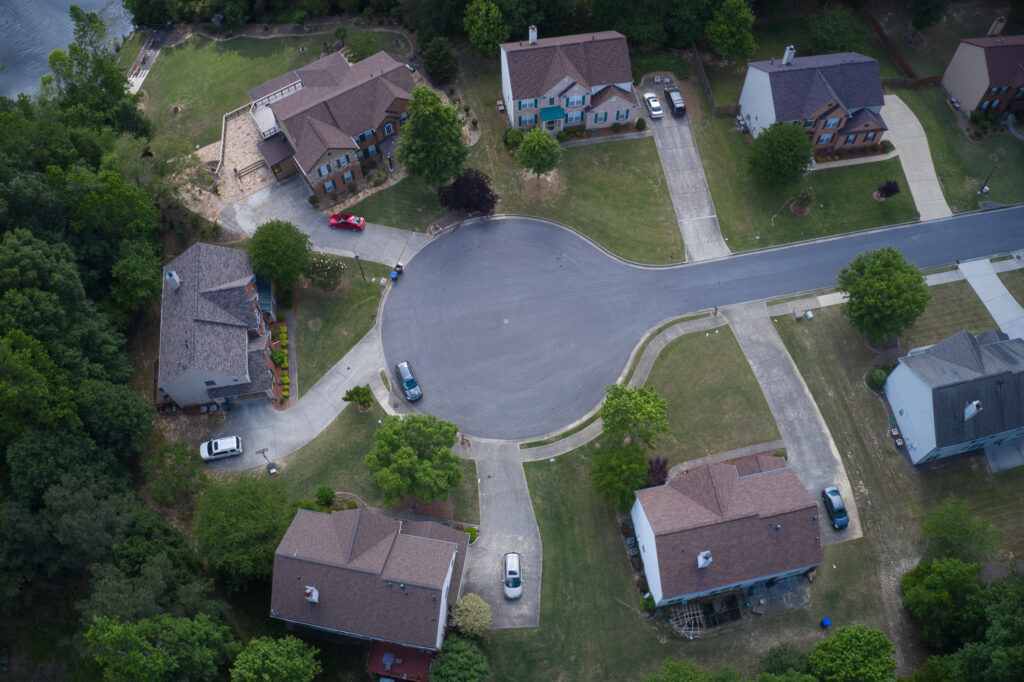
For starters, homes that are meant to be one- or two-car households become four- or even five-car. Why? As families grow, every licensed driver needs a car. Everything is just too far away and there is no public transit or bike lanes into a cul de sac.
Plus, the inefficiencies create the very dangerous traffic people were trying to avoid. With larger suburbs, we see rushing adults trying to get to work combined with kids trying to catch school buses. It’s a really, really bad combo. There’s no separation or protection for the kids—often not even sidewalks. You know what happens next.
And, even if the worst case doesn’t happen, cul de sacs are the antithesis of walkable neighbourhoods. Even a loaf of bread or a dozen eggs can be a 10 or 15 minute drive. Not only does this increase costs of living—actually increasing cases of home foreclosure within cul de sacs—but it reduces human movement. You have to be very active to get 10,000 steps in the suburbs. Urbanites do it daily.
Activity falls; obesity rises.
And community decays as well.
You see this reflected in the way modern McMansion style homes are built—spaces that were once meant to be communal are incorporated into private homes.
Homes are built with wet bars, pools, home theatres… why?
Because you’re so damn far from accessing an actual neighbourhood pub or public pool that you need your own. Expenses are further pushed onto homeowners and we get increasingly separated from any type of community. Interaction becomes purposeful, planned and insulated in our own social bubbles. No lively discussions with strangers at the pool table—just you and your brother-in-law complaining about property taxes… again…
…which are to high because, yes, the cul de sac reduces density and therefore creates a higher rate of taxation per home.
People arrive home angry after their long commutes, often to neighbourhood cul de sacs overstuffed with cars blocking their driveway. Anger translates into marital strife and sometimes even child abuse.
Think I’m crazy? Spot the average suburban dad at an urban-set event. They’re grouchy an unpleasant. Why? they just suffered an hour in traffic, searched for expensive parking for 15 minutes and barely got their oversized suburban trucks into a parkade built for subcompacts.
Now add a bad day at work to the mix and coming home to screaming kids and a cold dinner.
Is it an excuse? No.
But you can trace so much of it back to suburban planning—and the cul de sac.
Literally, people spend thousands on vacations even just for the simulation of a walkable neighbourhood. That’s how bad they want to escape this so-called “paradise.”
OK. So let’s get back to the meat of the article. The fact is, you probably wanted your cul de sac to look like this:

But in reality—it actually looks like this:
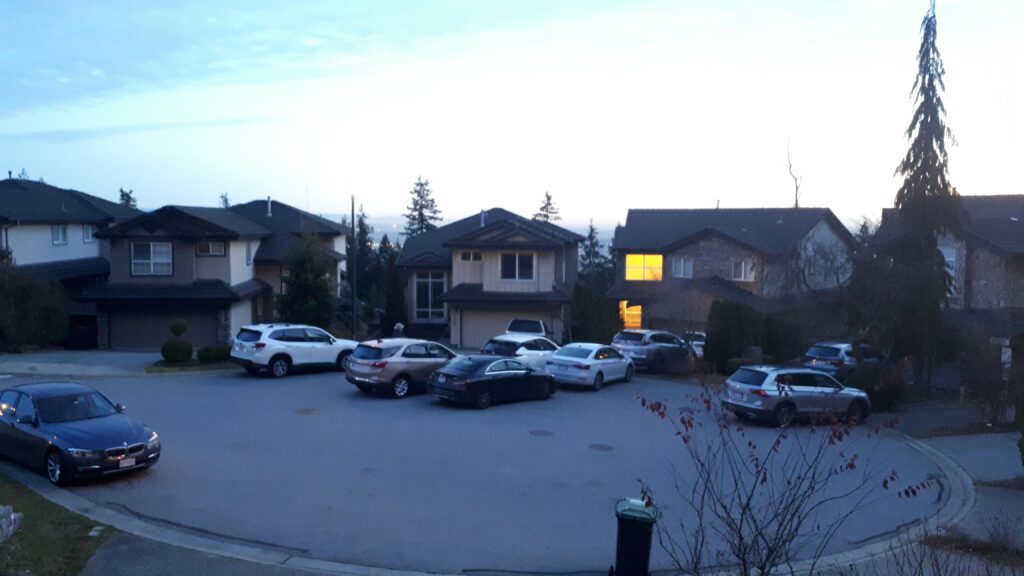
Would you let your kids play on this street? Does this look like paradise?
And that’s how your dream became a nightmare.